If your website traffic is steady – or even growing – but enquiries feel noticeably fewer and far between, you’re not imagining it.
This is one of the most common frustrations we’re hearing from business owners heading into 2026: “We’re getting traffic… but our website is not converting visitors into leads like it used to.”
The reality is that traffic alone no longer signals buying intent. The way people evaluate, compare, and commit has fundamentally shifted – and many websites are still optimised for a world that no longer exists.
This isn’t a UX issue. It’s a trust issue.
The growing gap between traffic and enquiries – the key to why your website is not converting.
For years, conversion advice centred around mechanics:
- Shorter forms
- Brighter buttons
- Better page speed
- Fewer clicks
Those things still matter – but they’re no longer decisive.
In 2026, most “low conversion website” problems aren’t caused by friction in the interface. They’re caused by friction in belief.
People are visiting websites with a very different mindset than they did even three years ago. The job of your site has quietly changed from convincing to validating.
If your website is not converting, it’s usually because visitors don’t yet trust that choosing you is the safe decision.
Behaviour Shift #1: Validation Loops Have Replaced Linear Funnels
The old mental model was simple:
- Visit Website
- Read it
- Enquire
- Decide
That flow barely exists anymore. Modern buyers loop. Constantly.
They’ll:
- Visit your site
- Leave to check reviews
- Ask ChatGPT for alternatives
- Compare pricing elsewhere
- Return later on a different device
- Re-read a single section
- Leave again
This happens whether they fill out your form or not.
If your site assumes a linear journey, it creates subtle doubt. Visitors don’t think “this site is bad” – they think “I’m not ready yet”.
High-trust websites acknowledge this behaviour. They don’t push urgency; they support reassurance.

Behaviour Shift #2: AI-Assisted Comparison Is Now the Default
A major reason SEO traffic gets no enquiries in 2026 is simple:
Your website is no longer the primary comparison engine.
Buyers are asking AI tools questions like:
- “Who’s best for this?”
- “What should this cost?”
- “Is this company legit?”
- “What are the red flags?”
That means visitors often arrive pre-educated – and far more sceptical.
They’re not looking for marketing claims. They’re scanning for alignment between:
- What your site says
- What others say
- What AI summarises
Any inconsistency introduces hesitation.
This is why “why a website gets traffic but no leads” is increasingly tied to credibility gaps, not visibility problems.
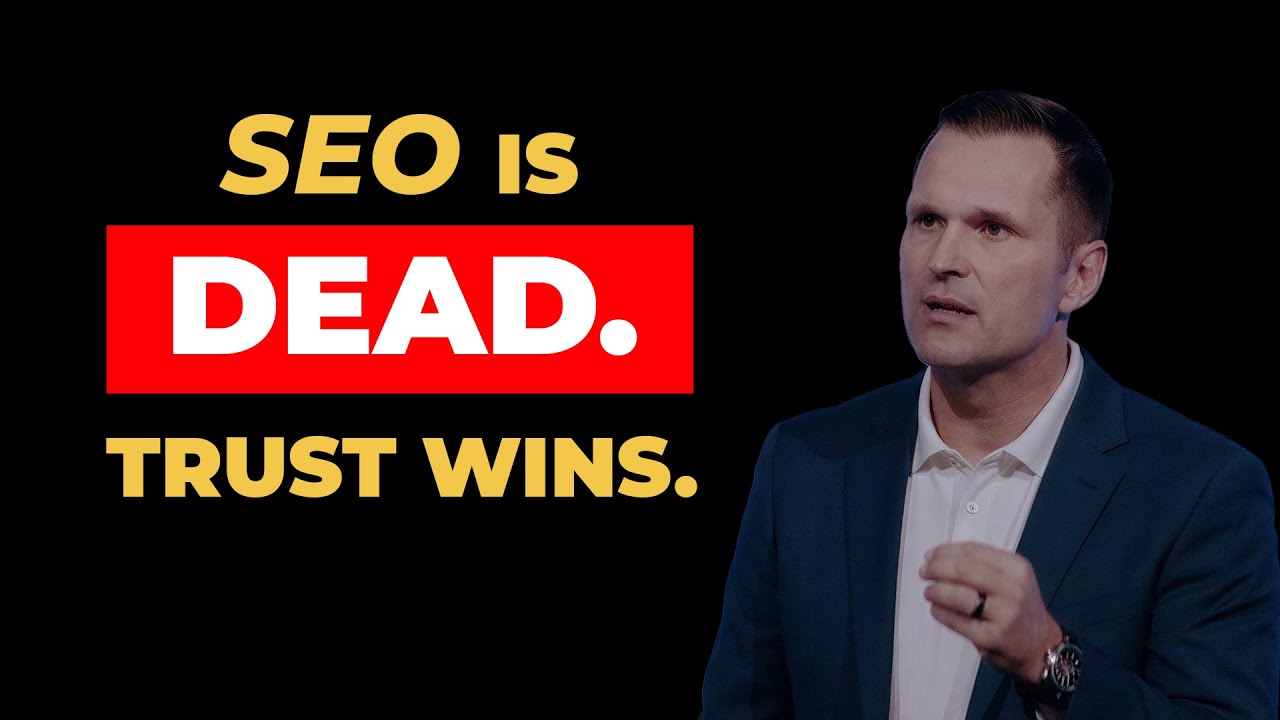
Behaviour Shift #3: Trust Has Become Fragile (and Slow to Earn)
Consumers in 2026 are more cautious than they appear.
Trust has become fragile, and consumers have:
- Been burned by over-promising providers
- Seen polished websites hide weak delivery
- Experienced “great sales, poor follow-through”
As a result, people assume risk by default.
A site can look modern, fast, and professional – and still fail to convert if it doesn’t prove reliability.
This is where many businesses get stuck: They optimise for impression, not assurance.
Conversion Is No Longer a UX Trick: It’s a Trust Outcome
When we analyse low-conversion websites today, the issues rarely show up in heatmaps or CRO tools.
They show up in questions visitors can’t answer confidently:
- Do they actually specialise in my situation?
- Is this pricing realistic or bait?
- Will this still feel like a good decision in 6 months?
- What happens after I say yes?
If your site doesn’t reduce those fears, traffic stalls at consideration.
That’s why adding another call to action rarely fixes the problem.
What High-Trust Sites Do Differently in 2026
High-converting websites haven’t abandoned UX – they’ve reframed it around credibility. And here’s what they consistently do better.
1. They Show Depth, Not Just Polish
High-trust sites explain how things work, not just what they offer.
They:
- Break down processes transparently
- Acknowledge trade-offs and limitations
- Explain who they’re not for
This signals confidence and filters the right enquiries in.
2. They Remove Pricing Ambiguity Early
Hidden or vague pricing increases decision friction. High-trust sites don’t always necessarily publish exact numbers, but they:
- Provide realistic ranges
- Explain what changes the price
- Clarify what’s included (and what isn’t)
This reduces fear of a bait-and-switch conversation.
3. They Use Trust Signals as Evidence, Not Decoration
Logos and testimonials still matter – but only when contextualised.
Strong sites explain:
- Why a case study is relevant
- What changed for that client
- How results were achieved
This turns social proof into proof of competence.
4. They Speak to the Decision, Not Just the Problem
Many sites over-index on pain points. High-trust sites focus on the decision moment:
- What happens after you enquire
- What onboarding looks like
- How risk is reduced
- What success realistically means
This lowers cognitive load at the point of action.
Why More Traffic Won’t Fix a Trust Problem
One of the most expensive mistakes businesses make is assuming a traffic issue when the real problem is confidence.
If your website trust signals are weak, doubling traffic often:
- Increases bounce rate
- Increases time-wasting enquiries
- Decreases lead quality
This is why SEO traffic with no enquiries is becoming more common, not less. Visibility without credibility just amplifies doubt.
The Real Question to Ask in 2026
Instead of asking:
“Why isn’t my website converting?”
The better question is:
“Does my website make choosing us feel like the safe option?”
High-trust websites don’t rush visitors to act.
They remove reasons not to.
And in 2026, that’s what conversion actually looks like.
So what next steps should you take?
If your website is getting traffic but enquiries feel inconsistent, the issue is rarely SEO, design, or “one more tweak”.
It’s usually a trust gap – and those are hard to spot from the inside.
A proper review looks beyond clicks and heatmaps and instead asks:
- Where do visitors hesitate?
- What questions go unanswered?
- What feels unclear, risky, or vague at the decision point?
That’s exactly what we look for in a Website Audit.
It’s not a redesign.
It’s not a CRO checklist.
It’s a clear-eyed assessment of whether your site makes choosing you feel safe.
If you want an honest read on why your traffic isn’t converting, and what would actually move the needle in 2026 – you can start there.
Share To

Written ByNick Marden
Nick is the founder of Strong Digital. He’s been building websites since dial-up – starting in his bedroom in 1999, back when HTML felt like magic. These days, he leads the team at Strong, helping businesses grow with smart strategy, solid tech, and websites that actually pull their weight. Read more by Nick.